
Access to fresh, healthy food and food security are important to the health and wellness of our community. So much so, that the City of Reno identified these issues as priorities in both the city’s Master Plan and the Sustainability and Climate Action Plan.
The holiday season is a time for our community to reflect on these issues. Most of us anticipate elaborate home cooked meals that will be enjoyed with friends and family. Thanksgiving dinner is expected to consist of a beautifully roasted turkey, mashed potatoes, stuffing, cranberry sauce, gravy, and green bean casserole among many other fixings. But, for people who struggle daily to put food on their tables, this time of year is nothing to look forward to. While many expect to have an especially full belly during this holiday while they relish in what they are thankful for, others are reminded of their challenge to stave off hunger.
According to the Map the Meal Gap, there are 365,160 people in Nevada who are food insecure. Food insecurity, as defined by the USDA, is access by all people at all times to enough food for an active, healthy lifestyle. The face of food insecurity in Washoe County may come as a surprise to most. Many people most readily associate food insecurity with the homeless population. The reality is that more than one in 10 Washoe County residents are food insecure, and of these people, approximately 75% of them live in a household with a full or part time employed individual. As housing costs continue to rise in our community, more of these individuals and families are choosing between buying food and paying their housing and transportation costs, utilities, or purchasing medication.
The Food Bank of Northern Nevada (FBNN) serves residents across northern Nevada, encompassing 14 counties within their service area. Its’ vision for the future is, “Healthy food. Every person. Every day.” Of the 91,000 people served each month, around 63% reside in Washoe County and more than half are seniors and children. FBNN has been fighting these statistics since the early 1980s. Along with distributing enough food for over 15 million meals annually, the FBNN provides programming and assistance on nutritional education, SNAP outreach and education, school food pantries, the Kids Cafe after school and summer food assistance program, and senior food assistance programs.
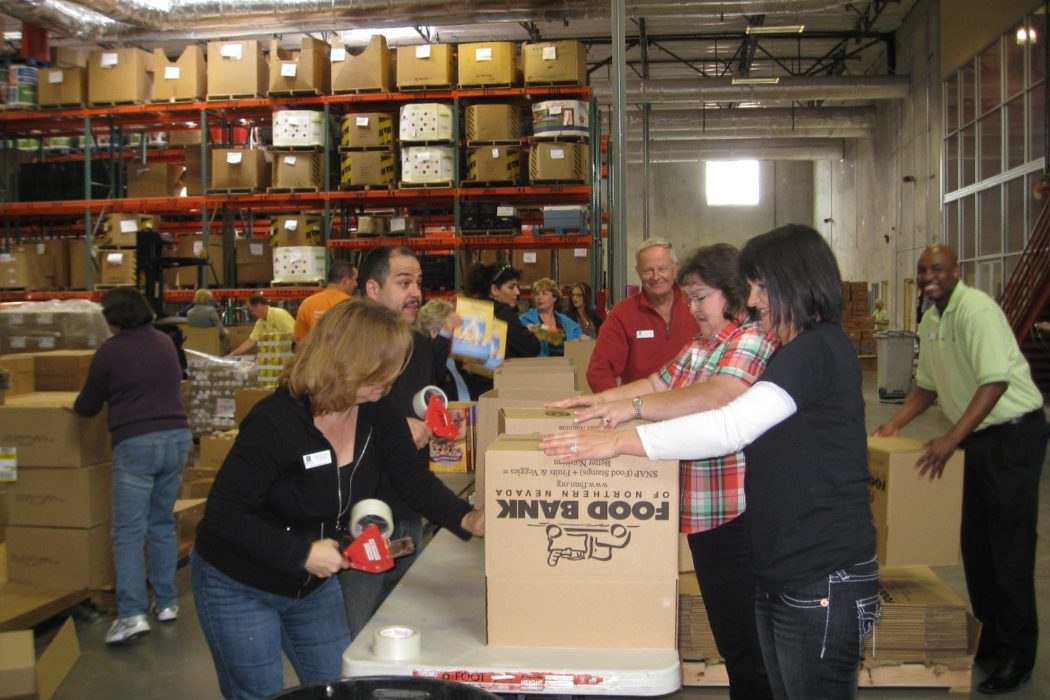
FBNN works with over 140 partner agencies and direct service programs to fight hunger. FBNN also relies on the generosity of community members that volunteer to help sort and pack food at the distribution center, distribute food in the community, facilitate special events, and more.
You too can help through this holiday season and into the New Year through donations or volunteer opportunities. If you are interested in donating, but don’t know exactly what foods are needed, remind yourself of one word: nutrition. Healthy food is not always donated to food banks, yet is always preferred. The FBNN wants to distribute as many nutritious food items as possible to the people they serve. Here are some ideas:
- Canned Meals: Stews, Soups, Spaghetti/Ravioli (Low-Sodium Preferred)
- Protein: Peanut Butter, Tuna, Salmon, Chicken, Dried or Canned Beans
- Grains: Whole Grain Cereal, Oatmeal, Brown Rice, Whole Grain Pasta
- Fruits: Canned (Packed in 100% Juice or Light Syrup), Dried Fruit, Applesauce (No Sugar Added), 100% Fruit Juice Boxes
- Vegetables: Canned (No Salt Added and/or Low-Sodium Preferred)
- Dairy: Shelf Stable Milk
- Kid-friendly Snacks: Granola Bars, Popcorn, Animal Crackers, Graham Crackers
- Baby Products: Formula, Infant Cereal, Baby Food
Though there is a need for food during the holidays, it is important to remember that hunger isn’t seasonal. Members of our community struggle with food insecurity during all times of the year. When the hustle and bustle of the holidays subsides and the spirit of giving isn’t as prevalent, remember that there are still empty bellies to be fed and there are numerous ways to help.

Photo by: Faith Delfin, Food Bank of Northern Nevada
- Sign up to volunteer at the FBNN for shifts that run Tuesday through Thursday: 1:00 – 3:30 p.m. and 5:30 – 8:00 p.m., Friday: 1:00 – 3:30 p.m., and Saturday: 9:00 – 11:00 a.m. and Noon – 2:00 p.m.
More local opportunities are also available, from helping to feed the homeless to faith-based organizations in the community that provide volunteer opportunities for people to help feed the hungry. While not an extensive list, here are a few organizations you might consider if you’re not already volunteering or donating through your faith-based and social networks:
- Three Saturdays a month, the Rise and Dine team invites volunteers throughout the community to cook their favorite recipes, serve dinner, and distribute clothing to hundreds of locals without a home.
- The Reno-Sparks Gospel Mission serves a traditional Thanksgiving dinner downtown and at several senior citizen centers to as many as 1,200 needy men, women and children, and they giveaway several thousand winter coats and supplies to all in need.
- Catholic Charities of Northern Nevada helps to reduce hunger through St. Vincent’s Food Pantry, which serves more than 15,000 people each month, and the Dining Room serves a free hot lunch to over 500 people each day Monday through Saturday.

Photo by: Harvest for Hope
- The Merry War Theatre Group is holding their 5th annual Harvest for Hope event to provide Thanksgiving meals and kindness kits to the homeless community.
