
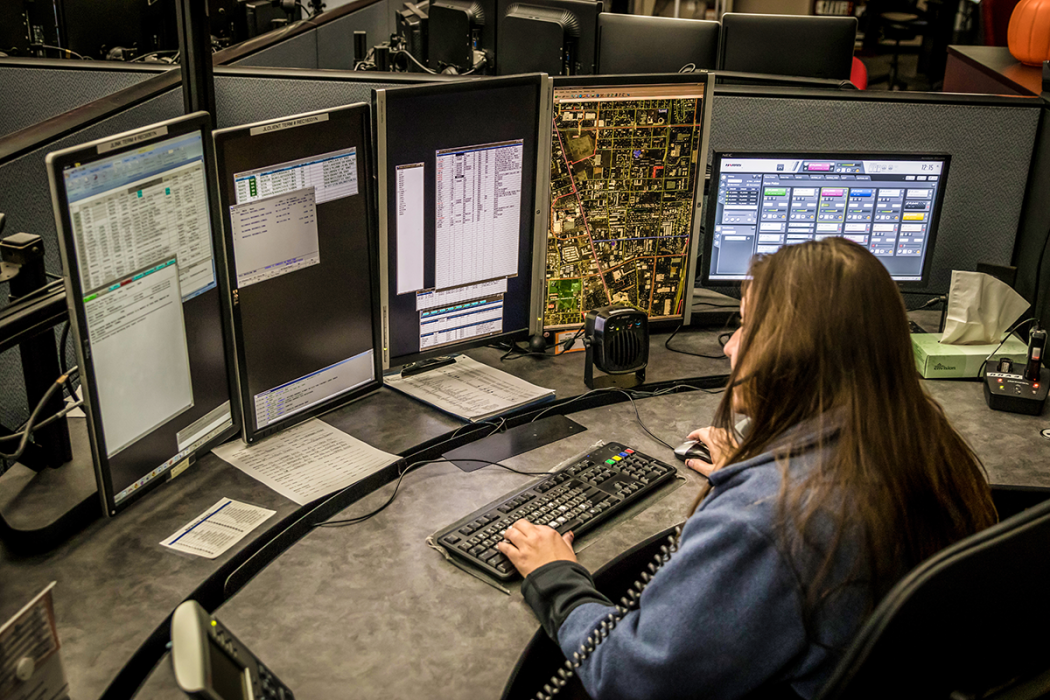
The City of Reno is celebrating the second full week of April (April 8-14, 2018) as National Public Safety Telecommunicators Week. Our Public Safety Dispatch department offers these tips, which could help save a life:
Calling 9-1-1
Know Your Location
The first piece of information Dispatch needs is the emergency location (full address or cross streets). Be as specific as possible (inside/outside, on the corner, etc.). For example, a routine 9-1-1 Dispatch conversation goes something like this:
“9-1-1, what is the location of your emergency?”
“Reno.”
“Where in Reno?”
“My house.”
“What the address of your house?”
If you’re traveling, know what road you’re on and in what direction you are traveling.
Dispatch works with several different agencies and when callers are transferred, they may be asked to repeat information (addresses, phone numbers, etc.) several times. Citizens may also be referred to a different agency, such as City of Sparks or Washoe County, to report a crime or concern.
Don’t Count on GPS
While technologies are advancing and giving us new tools to assist citizens quicker than ever, the representations frequently depicted on television are highly inaccurate. Cell phone GPS comes close sometimes, but it is not like the movies.
Learn Your Address
Everyone should learn their address, especially children. If they don’t know, it’s important for the information to be written down where they can find it easily. It is also important to know (or at least have access to) the addresses of loved ones and close friends in the event you need to call for help on their behalf.
Employers, post your address and phone number for your employees as well. They may know how to get to work, but may not remember the appropriate address off the top of their head in an emergency.
Families with babysitters, post your address and phone number for your babysitters. They may know how to get to your house, and the name of the family there, but may not remember the actual address — especially during an emergency.
When to Call 9-1-1
Know what types of situations justify a 9-1-1 call and provide the non-emergency line number.
More Tips
It’s important to stay calm when calling 9-1-1. Yelling, screaming, cursing at dispatchers only delays the process.
Discuss that a dispatcher is required to ask a series of questions to determine type of response, associated descriptions, and officer safety risks. These questions do not delay response, nor do they indicate that dispatcher does not believe you. While speaking with a caller on 9-1-1 , police/fire may have already been dispatched and the dispatcher asking questions is not delaying their response.
Disconnected cell phones should not be toys for children unless they take out the batteries as disconnected cell phones can still call 9-1-1.
You will be cited or arrested for intentional 9-1-1 misuse. Additionally, if someone calls 9-1-1 by mistake, he or she should not hang up. They should stay on the line to let the dispatcher know what happened so they know there really isn’t an emergency. A lot of time and resources are wasted trying to track down pocket dials or accidental mobile phone emergency calls.
What is a Dispatcher?
Dispatchers are highly trained “telecommunicators” and civilians. They take incoming 9-1-1 and non-emergency line calls, triage the situation and then dispatch (“send”) the appropriate resources. This seems fairly simple and straightforward, but it is not. Many situations are complex and time is critical. Sometimes, we are the last voice a person will ever hear. It is a very stressful but rewarding career.
Police Reports
Referral process: the Reno Police Department utilizes an online reporting system that can process reports for a number of non-emergency crime or concerns. For example, non-injury accidents, destruction of property, some theft, etc. The online reporting system provides a convenient way to report crimes that do not require the presence of an officer, and it increases police productivity by freeing officers to perform other law enforcement activities. In addition, users may find it is a more convenient way to file a police report needed for an insurance claim. Additionally, a citizen can make reports in person during normal business hours.
The police do not need to respond to every motor vehicle accident. If there are no injuries, the vehicles are drivable/no fluids leaking and no intoxication concern, accidents will be referred to the online reporting system.
The police department also does not have jurisdiction on private property (parking lots) unless there is an injury. Insurance companies handle the follow-up investigation into fault.