
As a recent transplant to Reno, I was honored to join the city’s Commercial Green Building Task Force where I’ve been able to share my experience in expanding energy efficiency and green building in New York and other communities. LEED for Interior Design + Construction (LEED ID+C) is an important tool for improving the performance of existing buildings, providing a sustainable and healthy workplace, and increasing the value of these real estate assets. That’s why I’m thrilled that the City of Reno is hosting a LEEDv4 ID+C Workshop on April 17, 2018.

Over the past 10 years I have seen major changes in perceptions and client expectations in the design of sustainable and healthy interiors. I have led the interior design of over 30 LEED certified projects, ranging in size from about 5,000 SF to over one million SF. Most of the projects were certified at the Gold level, with a few Platinum and Silver certifications. During the mid-2000’s, I was often asked to present the business case for designing sustainable and healthy interiors to help clients determine whether or not to pursue LEED for LEED ID+C certification. Today, the business case is clearly documented through research. The social, environmental, and economic benefits of going for Gold or Platinum is simply good business for many companies and organizations.
If you’re looking for data for your clients, try one of these resources:
Over the years I’ve learned that a few basic ingredients can determine the success of a LEED ID+C project, with the most important being the team. The best outcomes come from experienced teams: architects that understand the LEED process, are skilled at facilitating discussions on what is achievable, and have experience managing the LEED documentation requirements; mechanical engineers who understand and have completed LEED certified projects and can inform an integrated design approach for optimizing energy performance; and, if needed, bringing on an outside LEED consultant who can guide the process and manage the documentation requirements. A savvy contractor is a plus; one who commits to the process and understands what is involved. A more experienced “green” team will result in lower construction costs and sometimes a higher level of certification than anticipated. In fact, research has shown that LEED AP professional credentials add significant value to a LEED project team.
In my practice as an architect and interior designer, I find that designing for LEED Certified (the most basic level) or Silver can be done with little if any up-front construction cost beyond the fees for the architect, mechanical engineer, and LEED registration and certification costs. There used to be an upcharge for building green, but over the years that has almost disappeared with the advent of a myriad of green material choices and improvements in mechanical and lighting systems. If the core building for the interior space is already LEED certified, even LEED ID+C Gold can be achieved without much additional cost. For all levels of LEED, it has been shown that in most cases the up-front costs can be more than recouped within a few years.
Our approach at Perkins+Will is to bring the team together at the beginning of a LEED project to start brainstorming and reviewing the LEED Checklist together to determine which points are most achievable within the project budget, which ones are not possible, and identifying some “maybes”. If the project is bid the LEED requirements need to be made clear as part of the bid process. The contractor can then more easily understand the scope of work, as well as expectations for meeting LEED credits and documentation requirements. At each phase, the LEED Checklist can be reviewed and updated by the team, keeping the end goal in sight and preventing slip-ups in execution.
I highly recommend, even on small projects, working with a lighting designer who has deep experience with LEED. Lighting accounts for a large portion of any interior project’s energy use, and there are a confusing number of lighting choices that can make a big difference in energy consumption. A lighting consultant will be able to design the most efficient layout, fine tuning the lighting types necessary to get the required foot-candles while using the least energy. The small fee that is involved will be paid for many times over in energy savings and reduced fixture costs.
Another note about lighting is that the cost of LED lighting has come down to the level that makes it cost neutral in fixture price, without even factoring in the energy savings and reduced maintenance costs that will occur over time.
Another aspect of designing sustainable and healthy interiors lies in the choices for materials to provide healthy air quality. LEED offers credits for non-toxic materials, fabrics and finishes. At Perkins+Will, we’ve adopted the Precautionary Principle, and feel so strongly about leading the market to develop healthier products that we’ve posted our best choices for others on our website. We’ve listed materials to avoid, along with some suggestions for substitutions, and tips on how to get Material Data Sheets from manufacturers when not sure about a product’s ingredients.
Some of the easier and cost neutral LEED ID+C strategies are specifying low-flow plumbing fittings and fixtures and ENERGY STAR appliances. It’s also much easier now to specify either recyclable or recycled-content materials because there are so many options on the market.
It requires more effort and careful planning to provide access to daylight and views for the maximum number of occupants, yet this is another cost neutral facet of LEED ID+C. Good daylight design also saves energy by reducing lighting costs during daylight hours. More importantly, access to daylight and views significantly increases occupant satisfaction.

Source: World Green Building Council. Staff costs, including salaries and benefits, typically account for about 90% of business operating costs. A healthy, happy workforce is a vital component of a productive, successful business in the long-term.
For many clients, an added benefit of LEED ID+C is that it signals a commitment to social responsibility, as well as to occupant health. LEED buildings and interiors result in increased occupant satisfaction, which in turn has been shown to increase productivity, reduce absentee-ism, and improve recruitment and retention. For any company or organization, “people” costs are about 10 times the amortized real estate related costs (from design and construction through operations and maintenance). Reduced “people” costs coming as a result of increased satisfaction will have a significant impact on the bottom line. These less immediately tangible results have become apparent as the number of green buildings and interiors has grown, and as more and more market research has been done.
If you’re not yet convinced, I recommend you also review articles from facilitiesnet.com, the US Green Building Council, and the Illinois Institute of Technology:
- Do Green Buildings Cost More?
- Green Building Costs and Savings
- Cost Benefit Analysis of LEED and Energy Star Certifications
The City of Reno will host a LEED Interior Design + Construction Workshop on April 17, 2018, as part of the ReEnergize Reno initiative. Register for the workshop.
Written by: Joan Blumenfeld, FAIA, FIIDA, LEED AP ID+C, Perkins + Will
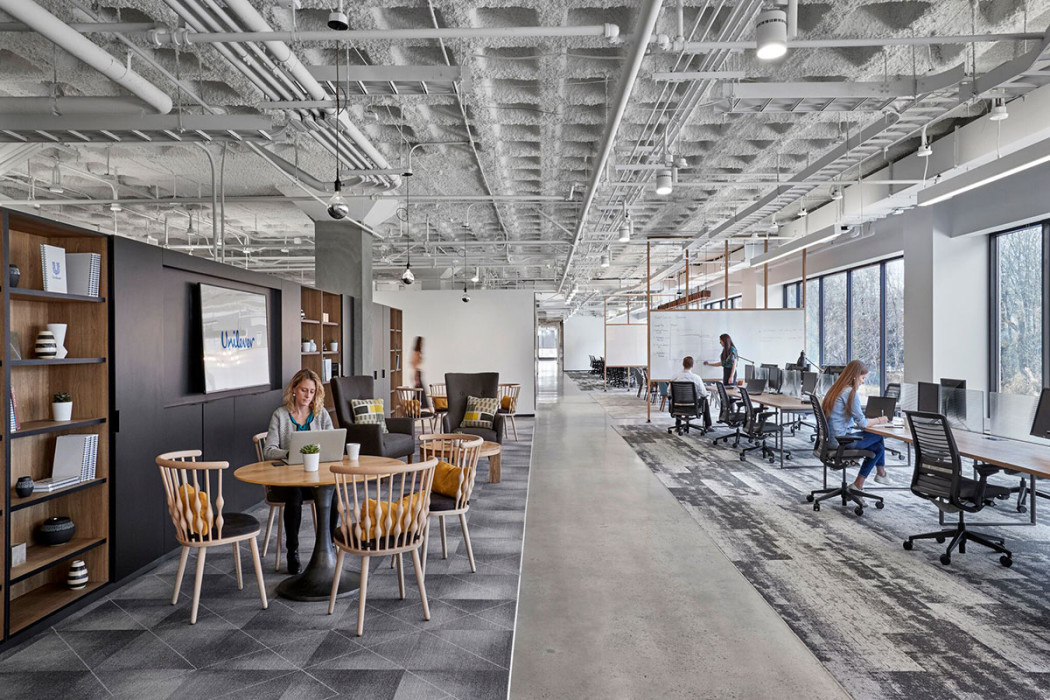
Photo credit: Perkins+Will, Unilever North American Headquarters, LEED ID+C Platinum (registered), photographer Eric Laignel
Joan Blumenfeld combines her background as an architect with a design excellence approach to interiors. Recognized as a thought leader in design, she was elected to both the College of Fellows of the American Institute of Architects (AIA) and of the International Interior Design Association (IIDA) in 2005 and 2014, respectively. Joan was a board member and former president of the New York Chapter of the AIA as well is President of the Beverly Willis Foundation, a board member of the Center for Active Design, NYC Building Congress, the Congress Foundation, IIDA, Pro Mujer, Harvard Graduate School of Design Alumni Council Executive Committee and Women Executives in Real Estate. Joan’s vibrant, elegant work has won almost 40 design awards in the past five years alone and been published in national publications such as the New York Times, Architect, Interior Design, Contract, Architectural Record, Art in America, New York Magazine, Vanity Fair as well as various trade magazines and newspapers. This year she was recognized as Contract Magazine’s Legend 2018.