
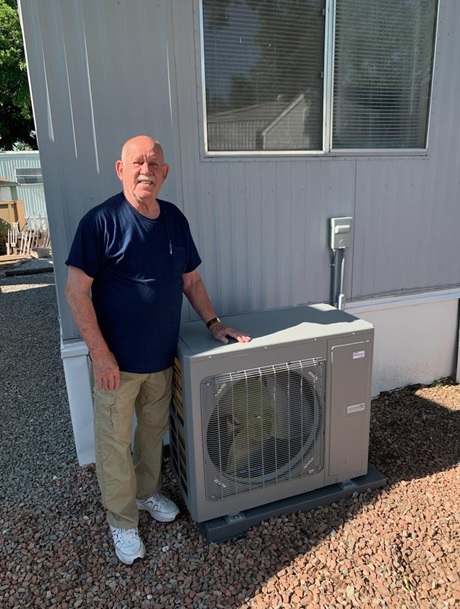
Heat Pump Pilot Project Assists Reno Residents
What is a heat pump? It sounds like it…pumps heat? Sort of. Heat pumps are an efficient option over furnaces and even air conditioners. Heat pumps transfer heat from a cool space to a warm space – they transfer heat rather than generate it (like a furnace) and keep your home’s temperature comfortable year round. Today’s heat pump can reduce your electricity use for heating by approximately 50% compared to electric resistance heating such as furnaces and baseboard heaters (energy.nv.gov). Heat pumps are becoming more popular as more homeowners and business owners move toward electrification. If all single family homes in the U.S. adopted heat pumps, the total annual emissions reduction would be at least 160 million metric tonnes by 2032 (https://www.rewiringamerica.org/circuit-breakers-heat-pumps)
Conventional heat pumps use the existing ductwork. Electrification involves converting the homeowner heat source over to high efficiency, electric, technologies such as heat pumps. Heat pumps offer an energy-efficient alternative to furnaces and air conditioners for all climates. Because they transfer heat rather than generate heat, heat pumps can efficiently provide comfortable temperatures for your home (https://www.energy.gov/energysaver/heat-pump-systems). Because heat pumps also offer cooling, we will also assist our most vulnerable citizens during extreme heat events.
The City of Reno recently closed out a grant funded by the Leon Lowenstein Foundation through the Urban Sustainability Directors Network. A very big thank you to these partners! This project was not possible without their support.
The Project
The project installed air source heat pumps in homes through Rebuilding Together Northern Nevada (RTNNV). These homes underwent significant rehabilitation to address health, safety, and financial issues for vulnerable populations – mostly senior citizens. The grant funds, partially or entirely, were used for the installation of a central source heat pump in the home. In connection with the project, a heat map was created to a) determine if appropriate neighborhoods were targeted and b) determine future neighborhoods for this type of project.
We understand that this important work is paramount to our future success as a city and region. Scientists predict that climate change will result in future conditions that are different and less predictable than in the past. It is our hope that this will act to reinforce the City’s longstanding commitment to green and sustainable development initiatives, and its commitment to reduce climate pollution, improve air quality and enhance resilience to climate change. This project is a first of its kind for Reno by starting the conversation around healthy homes, community engagement, energy efficiency, and new technologies and concepts.
The project achieved its intended purpose of creating a Pilot Program to retrofit homes with heat pumps, replacing oil, propane or natural gas, and targeting underserved residents in our community by a) installing heat pumps and b) creating a heat map, but did not achieve as many retrofits as expected. This was primarily due to the cost and the inability to supplement an alternative source with a small system. In all cases, a complete retrofit was required.
Heat is a significant issue in Reno, with Reno experiencing more and more 100+ degree days over the past 15 years. Since 1970, Reno has warmed faster than surrounding rural areas and is considered one of the fastest warming cities in the nation. With that in mind, this project also assessed whether targeted areas for heat pumps correlated with higher heat areas (which also tends to correlate with income-distressed neighborhoods).
Project Outcomes
- Three single family and one manufactured homes were completed.
- Three homes were senior citizen households and two were female head of household.
- Two homes were located in areas of moderate to high heat and three of the homes faced moderate to high energy burden (energy burden means their energy costs relative to their household income is higher than average).
Key Takeaways
- Underserved communities will have additional issues to overcome, such as electrical upgrades and sealing. These need to be budgeted. The manufactured home project required a new door to meet the required code for the heat pump.
- Existing heating sources may not be able to be supplemented resulting in complete removal and replacement with a heat pump capable of year-round use.
- Ordering the units was not as difficult as expected even with supply chain issues. Most likely due to the federal incentives and increased manufacturing under the Inflation reduction Act. However, it took a very long time to qualify residents and address their unique needs of the home. The cost per unit came in double what was initially expected as well.