
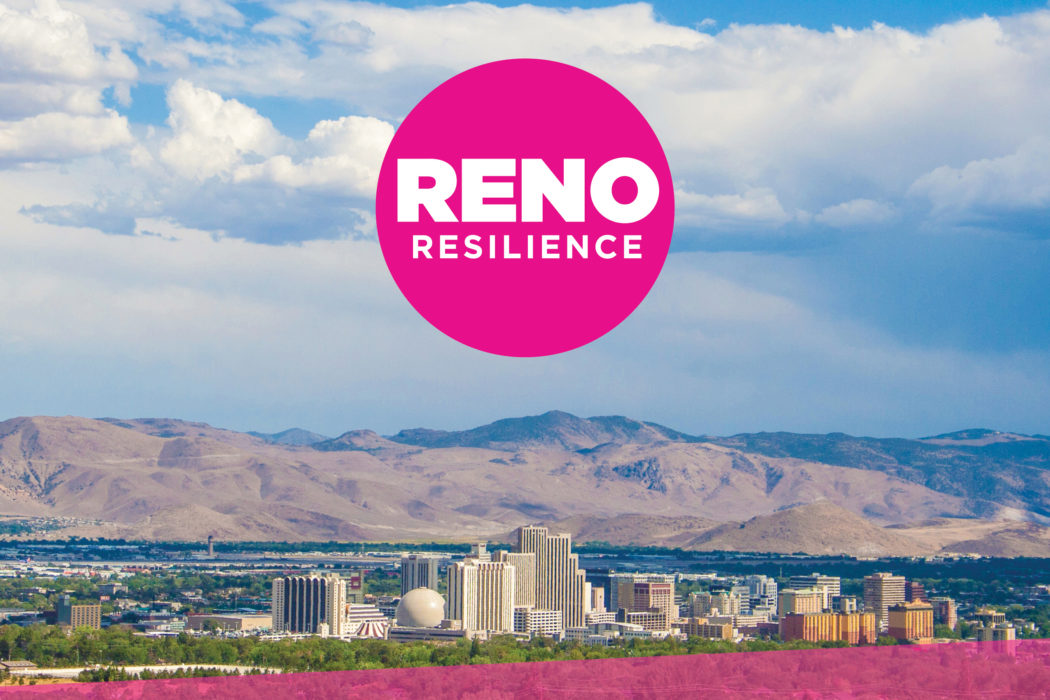
The City of Reno adopted its Master Plan in 2017 following a multi-year, community-based effort to prepare the new Master Plan, known as ReImagine Reno. Throughout the ReImagine Reno process, participants expressed support for the city’s sustainability initiatives and a desire for the Master Plan to take a stronger stance on sustainability. On July 31, 2019, the Reno City Council unanimously adopted the Sustainability and Climate Action Plan (Plan). The goals outlined in the Plan aim for increased tree canopy, lively communities, and transit systems that provide easy access to healthy foods, work, and shopping.
Since the Plan’s approval, an implementation strategy has been developed. In alignment with the Reno City Council 2020-2025 Strategic Plan, each of goals under the nine priorities were broken down into operational priorities, non-operational or community-based priorities, short term city-supported goals, and long-term city-supported goals. This ensured the goals were trackable and achievable, and cross-departmental and open to public engagement.
There has also been significant progress made under the plan, demonstrating our commitment to lead by example.
Priority Area #1 – Sustainable City Operations
Reduce energy and water use in city facilities 20% by 2025 from the 2014 baseline: The City commissioned a baseline study of water and met this goal prior to the Plan adoption. This is as a result of changes made to operations and improvements in technology. Reduction in energy use is being addressed through load shifting, facility demand management, and other efforts including lighting retrofits. A recommissioning study, which involves “tuning up” a building, was also done.
Reduce city fleet carbon emissions 28% by 2025: Sustainability and Fleet Management Staff identified opportunities for the potential reduction of carbon emissions from City fleet vehicles after performing a baseline emissions analysis using existing fleet data, inclusive of fire and police fleet data. This assisted the departments with understanding the potential for electric vehicles as well as reduced drive times. The City also has new electric vehicles in its fleet with more in the pipeline.
We also recently concluded an in-depth analysis of several sites for EV charging infrastructure. The analysis included energy modeling, cost modeling, and rate evaluations. By engaging in this process, we were able to identify at least three new sites for infrastructure
Priority Area #2 – Transition to Clean Renewable Energy
Expand solar, energy storage and EV charging infrastructure: The City has identified and explored possible grant opportunities to assist with the expansion of solar, energy storage, and EV charging infrastructure. A competitive funding award was won to explore a resiliency valuation project at the new Public Safety Center. The City’s renewable production was also quantified through a baseline study, and a subsequent paper regarding local government renewable energy expansion was accepted for publication by the North American Power Symposium.
Priority Area #3 – Green Building is Standard Practice
Expand ReEnergize Reno: The Wyndham Destinations property in Reno is the most recent organization to sign up and we continue to promote this recognition program.
Implement building energy benchmarking and transparency policy for large commercial and multifamily buildings: The City has implemented benchmarking for commercial and multifamily properties to begin energy tracking and reporting. The first reports were submitted July 1, 2020. Staff is presently analyzing the reports and getting ready for the reports due in 2021.
Priority Area #4 – Create Lively, Low-Carbon Neighborhoods
Expand use of shared, micro-mobility alternatives: A connectivity assessment which will inform our future master planning decisions around micro-mobility expansion, was completed and is in the next phase of analysis.
Priority Area #5 – Toward Zero Waste
Increase the number of single-family, multifamily and commercial buildings that subscribe to recycling services: Staff analyzed building data and Waste Management customer data and provided a list of multifamily buildings that recycle, organized by square footage, to Waste Management. Waste Management is beginning the process of a campaign for multifamily properties. Prior to the pandemic, the City convened a Multifamily Recycling Working Group. We recently held a call with representatives from the multifamily sector to address barriers regarding increases to recycling subscription services and are working on addressing said barriers.
The City was asked to join the federal Department of Energy Waste Reduction Pilot and will be sharing data and seeking ways to reduce operational waste.
Priority Area #6 – Healthy, Equitable Urban Forest
Develop an implementation plan to guide treeplanting activities throughout the city: Urban Forestry Staff is identifying Priority Planting Areas (PPAs) using heat map data and demographic data.
Adopt best practices in tree planting specifications and preservation. Encourage best practices in tree care and preservation: Urban Forestry Staff developed a plan with Public Works for new green infrastructure projects. Staff has become more effective at implementation of the existing tree preservation requirements as well.
Priority Area #7 – Access to Fresh, Healthy Foods
The City is in the early phase of working with community groups to create a public awareness campaign to promote existing Farmers Markets, urban farming, and other information to address food access awareness.
If you would like more information regarding the City’s Sustainability Program efforts, follow us on Twitter @RenoResilience or visit our webpage.