
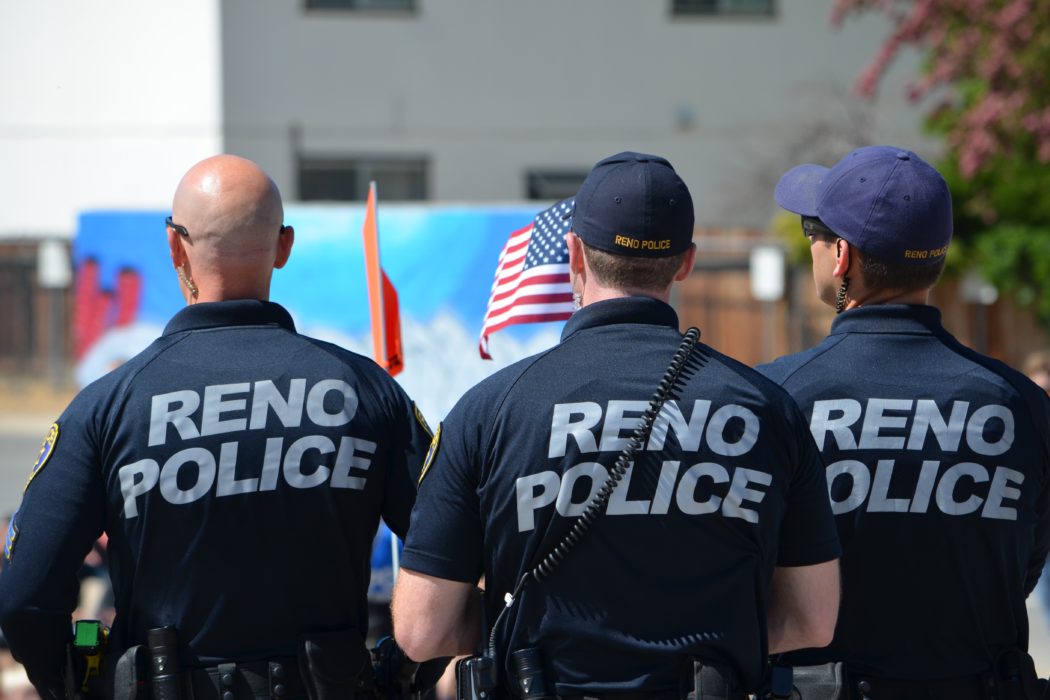
Community policing, the philosophy at the core of public safety in sustainable communities, is nothing new in Reno.
For four decades, the Reno Police Department has successfully implemented the community-oriented model that many cities today view as cutting-edge.
It’s important. According to STAR Communities, a national standard for sustainable communities, trusting relationships between police and the community is one of the cornerstones of preventing and reducing crime and increasing perceptions of safety. Community policing brings residents, youth, and community and faith-based organizations together as empowered partners in creating a safe community.
“Your RPD has a rich history of successful community policing, and our partnerships with residents, youth and community organizations has placed RPD at the forefront of community policing serving as a model agency throughout this nation. Transparency and trust is the foundation of our Community Policing Philosophy, as we strive to enhance public safety and improve the quality of life for residents and visitors,” Police Chief Jason Soto.
From their first day as recruits, sworn personnel of the Reno Police Department learn the skills they’ll use to build relationships with community groups, neighborhood leaders and residents.
They learn that they’re empowered to take steps every day to stay close to the community they serve and learn about its concerns — whether it’s neighborhood residents who worry about speeding traffic along a nearby street or a group of business owners concerned about late-night activity near their stores.
A specialized team learns to reconnect homeless people with the family and friends who care about them. Another team trains apartment managers on how to reduce crime and gang activity in their complexes.
And the police department works collaboratively with health-care and mental-health experts to teach officers the skills they need to defuse crisis situations involving people with mental-health issues.
It’s not just officers on the street who bring the community oriented philosophy to life. Crime victims who come to the front desk of the police headquarters are treated with kindness and respect by personnel specially trained to assist victims.
The Motel Improvement Team (MIT) addresses the health and safety of those community members living in hotels/motels throughout the city. Ensuring that these residents are not excluded or forgotten in community efforts helps strengthen the community and the police force in all corners of the city. In addition, the Downtown Enforcement Team (DET) is in place to improve the quality of life for residents in downtown Reno.
A streamlined digital platform, RenoPD.com, and a new app, MYRPD, allow residents and police to interact in new ways. User growth has been astounding as residents turn to the new tools for near real-time dialogue and transparency.
In 2017, RPD has 317 sworn police officers serving the community. They received an average of 129 calls per shift, 387 calls per day, 11,757 calls per month, and 141,087 calls per year. The department works hard to be of service to each person who calls.
The community-oriented philosophy also extends into the top ranks of the department. The department’s leaders meet regularly with business and civic leaders as well as representatives of advocacy groups, and the conversations aren’t always just polite chats over coffee and cookies. Straightforward talk builds better relationships, and better community relationships allow the police department to improve public safety. Their motto, “Your Police, Our Community” perfectly summarizes their intent to maintain strong relationships with the community in order to keep Reno safe for the over 250,000 residents and an estimated four million tourists per year.
Successful community relationships aren’t created overnight. As RPD officials explain the program to city officials from across the nation who are intrigued by Reno’s success, they emphasize that community-oriented policing requires a long-term commitment—the sort of commitment that Reno has made since the 1980s. It takes time and focused attention to build trust.
The work pays off. The 2017 annual survey consistently finds that more than three quarters of Reno residents give good marks to the police department in terms of department performance, crime-fighting efforts, and image, and the community’s sense of safety.
Another set of relationships—the connections between RPD and other local, state and federal law enforcement agencies in the region—plays a significant role in the protection of public safety.
Regular meetings of law enforcement officials allow exchange of information about crime trends—criminals, after all, don’t stop their work at the city limits—and joint training exercises allow agencies to work together smoothly to get regional resources into place during crisis situations.
Creation of a safe city can’t be a job that’s left only to law enforcement officers. Reno shows that a collaborative approach, one that fully engages the community, brings sustainable results.
Learn more the Reno Police Department by reading the 2019 Annual Report.
To learn how RPD contributes to the health and safety of our community, read the Reno Resilience Sustainability Report.