
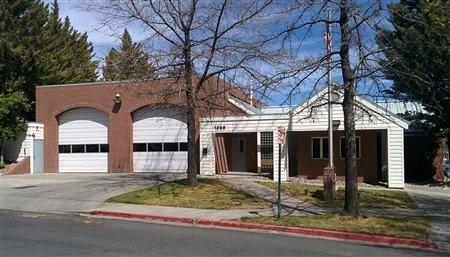
The United States Energy Information Administration (EIA) selected the City of Reno, Fire Station #4, to be part of a national study that collects energy related data about commercial buildings. The building was selected to represent many others with similar characteristics and energy use. The EIA’s Commercial Buildings Energy Consumption Survey (CBECS) is the only nationally representative source of statistical information on energy-related characteristics, consumption, and expenditures for the nation’s 5.6 million commercial buildings totaling 87 billion square feet of floor space (EIA.org). The thought behind the data is that buildings must be improved to make significant strides in reducing energy waste.
Earlier this month, Building Maintenance Operations Manager, Frank Avera, and City Energy Advisor, Suzanne Linfante, sat down with an interviewer assigned by the federal government program to collect information about the fire station. The City of Reno, thanks to the support from the City Energy Project, has become a model city in the steps it’s taking around internal and community-wide building performance initiatives.
“We are thinking about not only maintaining our facilities, but the efficiency and comfort of our buildings and where it all fits together,” Frank Avera.
The City of Reno has been benchmarking this facility for the past 1.5 years and was able to provide:
- The Energy Use Intensity (EUI)
- The natural gas cost and consumption for 2018
- The electricity cost and consumption for 2018
- Other characteristics of the building use and facilities
Once collected, the data will be augmented with geographic information and weather data. This is done to “normalize” the data for heating and cooling demand. Including this information, someone in a similar climate, with a similar building could also use the City of Reno fire station as an example for planning purposes or energy modeling. Energy efficiency in new construction and existing buildings has become a key target to reduce nation-wide energy use. Goals of the program are to estimate savings, reduce carbon emissions, and the overall cost effectiveness of energy efficiency measures. The data is used by:
- Building owners and managers
- Energy forecasters to predict future energy demand
- Students
- Architects because energy demand plays a large role in building design
- Developers use it to gauge market potential
- Other governments to make sound policy and operational decisions
Determining energy consumption of buildings can be used to decrease energy use in new commercial buildings by 20–30% and sometimes 40%+. Improving technologies and understanding building performance can lead to a cost reduction because systems are sized smaller to meet the building reduced use. These improvements not only save money and energy, but reduce a building‘s carbon footprint by 16% on average. A cost on carbon emissions from energy use increases the return on energy efficiency investments, making some cost-ineffective projects economically feasible (Journal of Energy Technologies, 01/2017).
Frank Avera will be awarded the City Manager Choice Award at our 2nd Annual Green Building Award Program on May 23, 2019 at The Grove.
Through ReEnergzie Reno, the city occasionally does tours of its facilities and upgrades taking place. Follow the Reno Sustainability program @RenoResilience on Twitter for the latest updates.