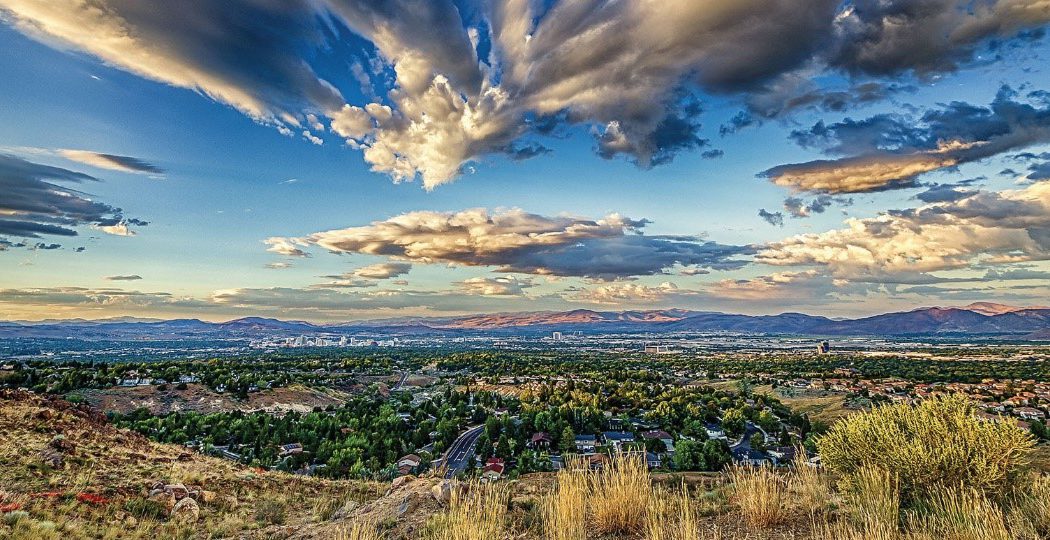
Reno is home to remarkable blue skies and clean air. It wasn’t always this way. As Reno’s population grew in the 1970s, hazy skies became very common in the wintertime. The haze resulted from temperature inversions that trapped wood stove smoke and car exhaust in the valley. Our air didn’t meet the health-based air quality standards set by the U.S. Environmental Protection Agency.
To address the problem, the Air Quality Management Division of the Washoe County Health District (AQMD) developed local initiatives such as the Woodstove and Smog Check Programs. AQMD’s Woodstove Program, one of the first in the country, became a model for other areas with wood-smoke problems. The Smog Check program reduces emissions from our largest source of local air pollution — cars and trucks.
The local initiatives were supported by national strategies that reduced air pollution from vehicles and power plants. Technology has greatly reduced tailpipe emissions from new cars and trucks compared with vehicles 20 years ago. Our greatest air quality challenge? We’re driving much more than we did in the past.
To protect our air quality as Reno grows, the Master Plan unanimously adopted by City Council in December 2017 directly and indirectly supports clean air.
An important theme in the Master Plan is improving the city’s development and redevelopment patterns so that they provide transportation options such as transit, walking, and biking as an alternative to driving. Every proposed project from re-striping a street to developing a major new residential community is an opportunity to include sustainable features that reduce our dependency on cars.
The benefits are felt widely. Closing gaps in the sidewalk, bike, and trail networks, for instance, can make walking and biking to school a more viable option. As more students walk and bike to school, rates of obesity and diabetes decline as well.
Increasing the tree canopy along these active transportation routes will make them more attractive and comfortable to use. Tree canopies also reduce urban heat islands caused when open land and vegetation is replaced by buildings, roads, and other infrastructure that absorb and retain heat. Heat Islands increase air pollution, and demand for energy rises from greater use of air conditioning causing an increase in greenhouse gas emission.
Employers can help take more cars off the road by offering an Employee Trip Reduction program. Offered in Reno by RTC Washoe County, these programs offer commuters resources and incentives to leave their cars at home and use alternative transportation.
Our clean air did not come by accident. Continued strong commitment and long-term vision from the community and local governments will be necessary to keep Reno a healthy community.
Clean air is an important factor in creating a more sustainable future. It contributes to a healthy environment, strong economy, and the well being of the community.
- Learn more about Reno’s 2017 Sustainability Report
- Learn more about AQMD’s efforts
- Learn more about RTC Smart Trips