
More and more communities are beginning to adapt and find ways to efficiently use renewable resources. When we think of “renewables”, we tend to think of solar and wind power, but did you know water is a renewable resource? The United States is fortunate to not have to endure water scarcities often. Water is used frequently and it’s easy to access. For Northern Nevadans, living in the high-desert means that we need to closely watch our water resources. There are countless benefits to saving water. For starters, decreased water usage leads to a decrease in energy required to process and deliver water, which then correlates to a reduction in air pollution and carbon emissions. Reno is making strides to be more sustainable by making it a goal to reduce water usage in city operations 20 percent by 2025. The city also challenged commercial, industrial and multifamily building owners to join us through ReEnergize Reno, a Reno Resilience initiative that was introduced to help reduce water and energy use community-wide.
According to an undergraduate research study conducted at the University of Nevada-Reno in 2018, Reno has met its 2014 stated goal of 20 percent reduction in municipal water use. With this success, it’s important to consider that 2014 was a year where the city saw unusually high water use. The increase in water use during this year may have been due to multiple variables, but drought during that year was most likely the greatest contributing factor.
Reno is nestled on the eastern slope of the Sierra Nevada Mountains with a semi-arid climate. On average, the city receives 7.4” of precipitation annually. The surrounding alpine areas receive more annual precipitation, mostly due to snowfall during the winter months. The snowpack in the Sierra’s is the main source of water in the city. Most of the water supplied to Reno by the Truckee Meadows Water Authority (TMWA), is reliant on Lake Tahoe and the Truckee River. Thanks to the high snowpack levels the region has experienced this winter, we are set to have a sufficient amount of water stored once the dry season rolls around.
The City of Reno uses nearly 36 million gallons of water annually for operations. Unsurprisingly, the city uses the most water in July, August, and September. Most water consumption can be credited to maintaining and watering parks within the community during the summer months. Idlewild Park, The Corp Yard-Campus, Silver Lake Skatepark, and Paradise Park, are responsible for around 65 percent of water consumption. In 2014, the city’s baseline year for its water use reduction goal, the city’s water usage was substantially higher at nearly 44 million gallons.
Reno is the fastest warming city in the U.S. Over the past 50 years, Reno has experienced an annual temperature increase of seven degrees. This alarming warming rate is due in part to a local urban heat island (UHI) effect. Urban heat island is defined as an urban area that is significantly warmer than its surrounding areas due to human activities. As cities develop, vegetation is destroyed as more surfaces are paved for building. The loss of vegetation and ground cover leads to less shade and moisture to keep urban areas cool. Not only does a UHI increase temperatures, it also extends the amount of time we experience these warm temperatures. Temperature is directly correlated with water demand. Higher temperatures are typically coupled with low precipitation, which leads to an increase in water demand for outdoor irrigation.
On a city-wide basis, there are a multiple strategies that can be considered to maximize water-saving efforts, such as understanding water use and patterns in the city, routine maintenance, reduced outdoor water use, choosing energy- efficient fixtures, and public awareness. You can further reduce your water footprint by:
- Not disposing of medicine, paint or other pollutants down the sink
- Fixing household leaks as soon as they become a problem
- Only washing clothes when necessary
- Taking shorter showers
- Turn off water when not in use. For example, don’t leave the faucet running while your teeth. Also, be diligent when gardening or watering plants.
- Using low flow toilets
- Checking for leaks in both pipes and faucets
Because water in our region is a limited resource, responsible water use is essential. Your contribution in water saving efforts will help the community in its quest to be as eco-friendly as possible. Plus, lower water bills aren’t too shabby either.
You can follow RenoResilience on Twitter and learn about water and energy savings workshops held under the ReEnergize Reno program.
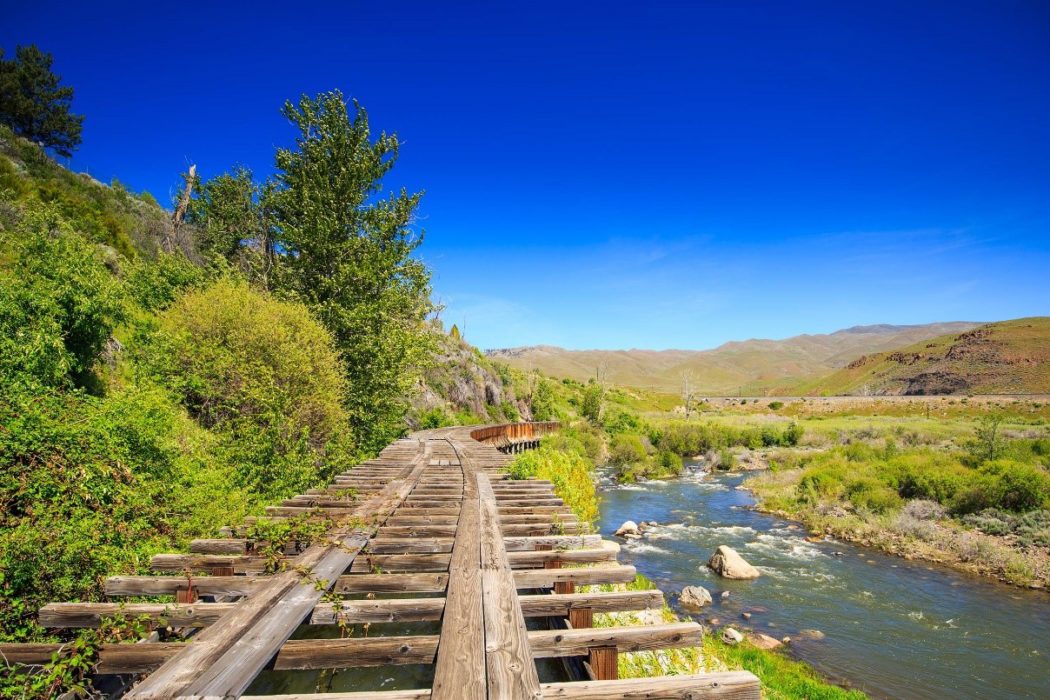
Photo credit: Truckee Meadows Water Authority
By: Faith Delfin, Sustainability Intern and student at the University of Nevada, Reno