
In recent years, Reno has made a name for itself in beer. Micro-breweries across the city have gained popularity, and with activities like Reno’s Brew Bike and our own local brewery competitions, Reno is one of the fastest-growing beer making towns. There are at least 15 in the immediate downtown and midtown area, and more popping up all over our little city. Reno is becoming a hotspot for craft breweries, as some of our more established bars have proven over the years, like Great Basin Brewery, Silver Peak, and The Brewers Cabinet.
But beer consumption at breweries and at home usually leaves behind an important byproduct: the container. Most craft beer comes in brown, glass bottles. Compared to aluminum and plastic, glass containers are already the more ecological and easily recyclable choice, making them extremely sustainable for long term use. But usually, once the bottle is empty and is transported to a recycling center, the glass goes through a rigorous cycle of being pulverized and melted down to join in the creation of new glass bottles. While this recycling process saves the amount of resources needed for new glass bottles, it doesn’t solve the full solution, and there is a way to further extend the lifespan and usability of glass bottles.
In Nevada, glass only attributed 3.14% of the total tonnage of recycled materials in 2016. According to the EPA’s most recent data on glass recycling, 26.4% of glass municipal solid waste (MSW) was recycled in the U.S. in 2015. This is due in part to the fact that the market for glass recycling is poor or non-existent in most parts of the country. Most often, when glass is sent to be recycled it’s actually downcycled. Downcycling is the process whereby an item is broken down into its’ component elements or materials and re-used as a lower value product. This means that recycled glass is often used as an additive in concrete or ceramic tiles, turned into fiberglass, astroturf, or used as flux in brick manufacture.
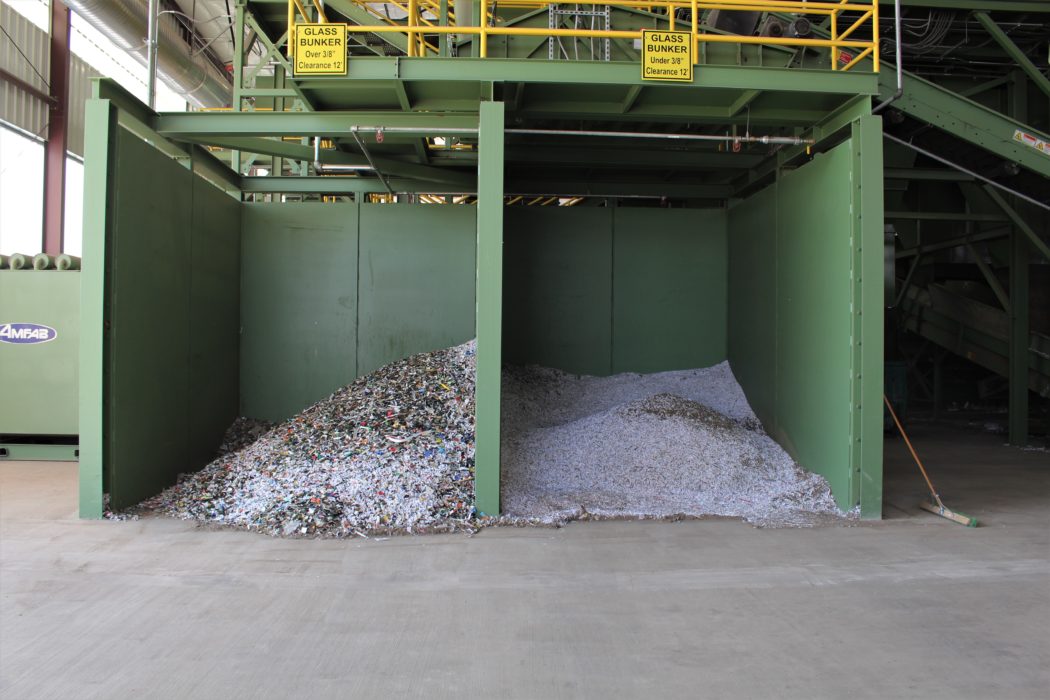
Waste Management Communications Specialist, Kendra Kostelecky, explains that glass collected in Northern Nevada via curbside recycling isn’t currently being recycled. Due to the weight, transporting glass to California markets is cost prohibitive and would result in an increase in rates to customers. However, it is put to beneficial use. The glass is crushed and used as Alternative Daily Cover (ADC) at Lockwood Regional Landfill. ADC is material other than earthen material placed on the surface of the active face of a municipal solid waste landfill at the end of each operating day to control vectors, fires, odors, blowing litter, and scavenging. The main reason for using glass as ADC is due to the high contamination found among most broken glass sent to the recycling facility. Contaminants and trash found in the batch prevents the glass from being recycled. Using glass as ADC gives it an efficient use and prevents landfill workers from having to carve into surroundings hillsides to use its soil for cover.
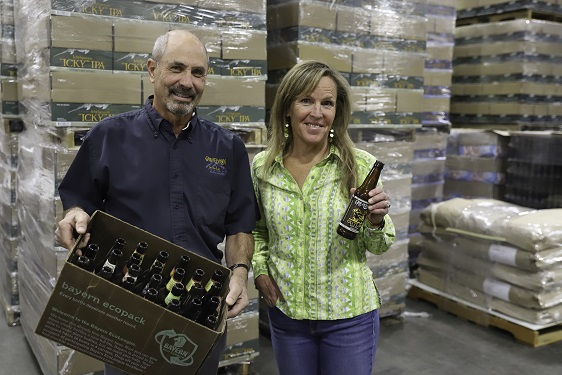
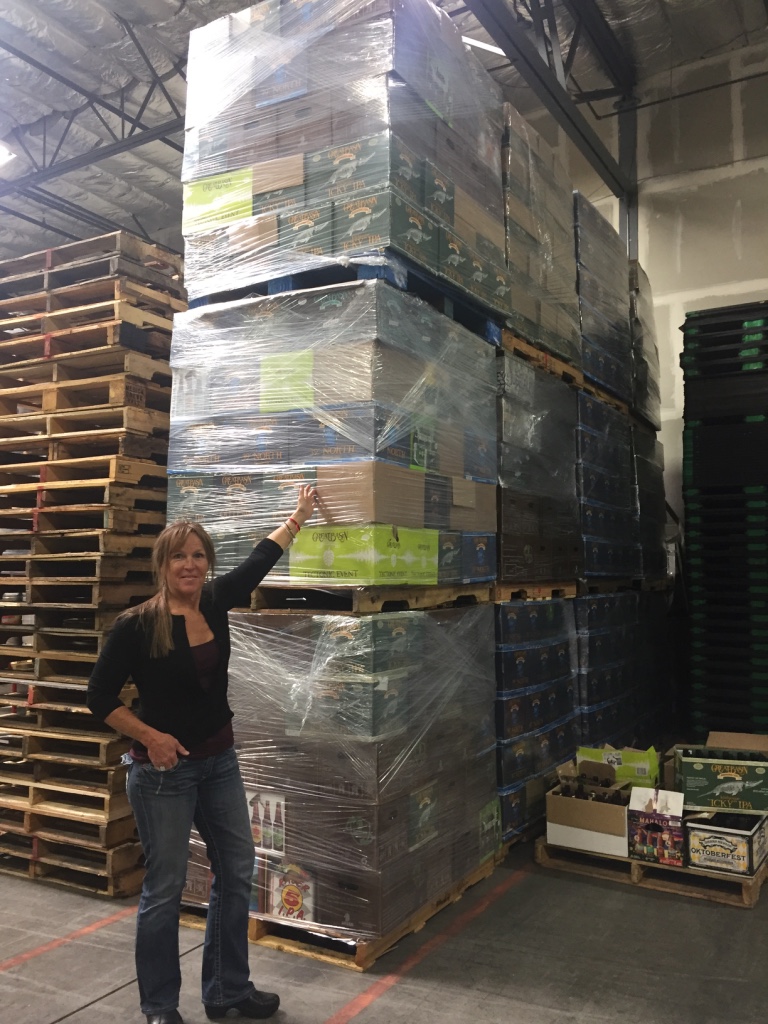
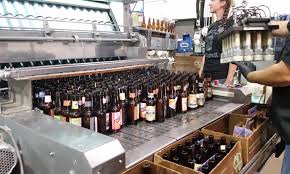
Glass can have a very long lifespan if it avoids the recycling process after just one use. That’s the mission in mind for the Truckee, CA based glass reuse company, Conscious Container. In their partnership with Beyern Brewing in Missoula, MT, they have recently begun a pilot program in Northern Nevada that invites people to drop off their empty beer bottles at designated locations, and then sends the bottles off to be thoroughly inspected, sanitized, and branded for reuse, giving beer bottles a second life while saving manufacturing costs and energy that would otherwise go into new and recycled bottles.
The program is just getting started and is still in its early stages. Northern Nevada is the second community to try this reuse pilot, with Truckee, CA being the first. The overall intent of the program is to re-establish a market for reusing glass bottles instead of directly recycling them. Reusing bottles saves 82% water usage and 97% energy consumption when compared to manufacturing new bottles and recycling used bottles.
If you would like to participate, here’s how you can get started:
- Look up the closest drop off location to you (there are currently six in the Reno/Sparks area)
- Collect and inspect your empty bottles (there are a few criteria to meet; like the bottle cannot have any logo or embossment directly on the glass, and twist off tops aren’t accepted. Full rules can be found on the Conscious Container website)
- Drop your bottles off
- Conscious Containers will pick them up and send them off to their partner, Bayern Brewing, in Missoula, MT to be sanitized and prepared for reuse.
Conscious Container aims to open the market to reusing glass containers, but it begs a couple of questions for the future: will the Reno/Tahoe area eventually see its own glass sanitation facility? Will this simple beer trend expand into something more robust and localized? Perhaps we can go beyond the pilot program and re-establish a market that has already been taken to by storm in other continents and countries.
Written by: Joe Staples and Faith Delfin, University of Nevada, Reno Interns