
We are on the dawn of a new era for Reno’s buildings. In the fall of 2017, the City launched ReEnergize Reno, its premiere Better Buildings Challenge that invites commercial, multifamily and industrial building owners and managers to join us by pledging to reduce building energy and water usage 20% by 2025. In Reno, the commercial and industrial building sectors generate 38% of climate pollution, and ReEnergize Reno is an ambitious program that will cut energy waste, save money and create local jobs. But it certainly isn’t the first step for the City. Reno has long had a sense of pride and care for the natural environment. While taking climate action is an ongoing process, Reno has previously implemented efficiency projects which saved the City significant dollars and energy while having a positive impact on our environment.
Two of Reno’s recent investments include the Truckee Meadows Water Reclamation Facility’s installation of a new, next-generation cogeneration system, which utilizes the waste water plant’s methane byproduct to generate electricity and heat. The other is Ameresco’s retrofit of HVAC equipment inside City Hall which cut the building’s energy consumption by nearly 50%. Both projects have contributed annual savings year after year, and prove that the investment in energy efficiency is not only good for the environment, but also good for finances.
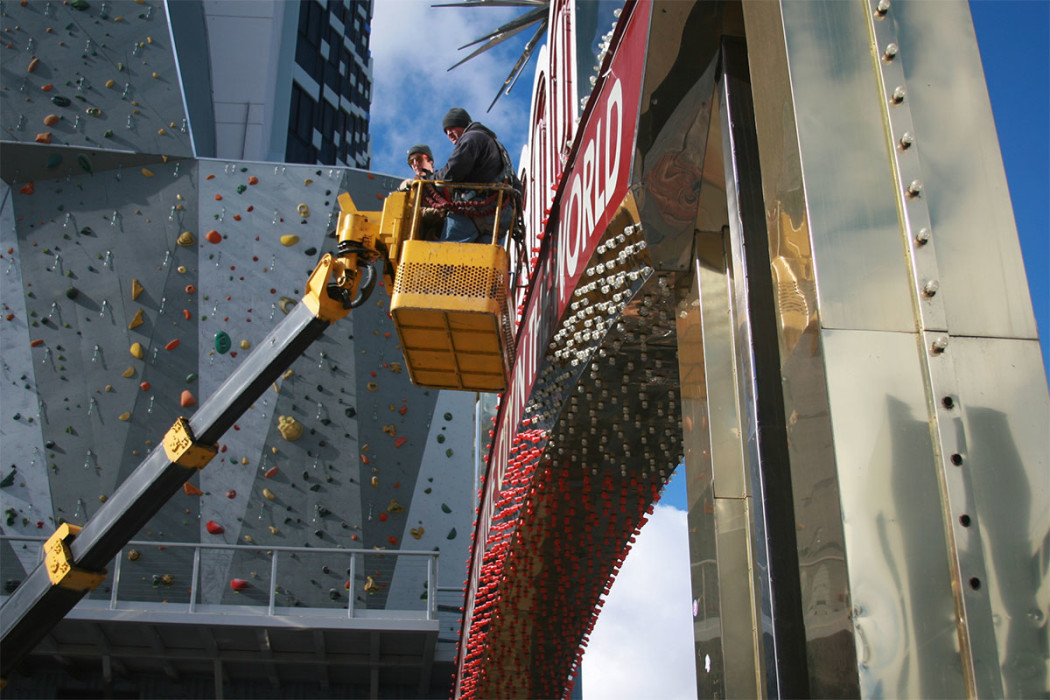
The City also contracted with Ameresco to perform a city-wide energy audit. This audit was able to help the City assess how they were spending money on energy and looked at ways they could implement tactics to save the City energy and money alike. The implementation and retrofit phase, which included City Hall and the famous Reno Arch, cost just under $15 million with applied rebates and grants, with a projected savings of $1.1 million annually. Since then, the City has saved on average $1.4 million annually.
Steve Frost, a graduate of UNR’s School of Engineering who now works for Ameresco played a key role in helping the City contract the energy project. He knows the importance and excitement behind the cost savings that energy efficiency projects can bring building owners. “In this case,” says Steve, “We used energy savings performance contracting to create a win/win situation where we evaluated opportunities to save energy and money to a level of detail that allowed us to guarantee the savings. It also allowed us to assist the City in securing financing for the project. With the financing and guaranteed savings from these investments, performance contracting can be viewed as a capital creation tool.” Evaluations like the ones Steve discussed can go hand-in-hand with benchmarking the performance of building. Benchmarking the historical energy use and implementing ongoing measurement and tracking of the building’s energy use ensures persistence of the savings going forward and helps identify additional opportunities for improvement.
In 2016, the Truckee Meadows Water Reclamation Facility installed a new cogeneration system that was responsible for generating electricity and heat by efficiently processing methane. The system uses biological processes to digest the waste solids, a biproduct of which is methane gas. Rather than simply flaring the gas and producing undesirable emissions, the gas is processed and cleaned so it can be efficiently burned, producing electricity and heat that offsets approximately 47% of the plant’s energy needs. The cogeneration system produces 988 KW per hour, reducing the plant’s electric bill by more than $440,000 annually. You can read more about it in our blog Truckee Meadows Water Reclamation Facility On Path Toward Net-Zero Energy.
Jason Geddes, former Environmental Services Administrator for the City of Reno, has pointed out one of the primary benefits of implementing energy saving projects is to have more control over your bill. Traditionally, utilities are paid based on how much energy is being used, but the amount of energy being used isn’t being tracked, allowing things to get out of hand. By benchmarking energy use and installing self-sustaining and energy efficient equipment, it allows building owners to have a stronger control over the cost of their utilities, especially in the long term. “For the City of Reno [projects],” Jason said, “the benefits included improved comfort in the working environment, improved indoor environment, and stabilization of utility bills. On a larger scale for the City, or any building owner, the stabilization of that green bottom line is a key component of success. Being able to hedge your utility bills against any future increases is the biggest benefit for other facilities in the area while also improving overall user comfort.”
Steve also had helpful advice for building owners looking to take part in ReEnergize Reno, “Have an executive sponsor. Somebody with accountability to make the whole plan come together; someone that really wants to save energy and improve the building and who can make this an important issue those who operate the building. Understand how the building operates in terms of what it costs. If you don’t know how much it will cost to operated and maintain it, how are you going to improve it? Keep track of the building’s performance and the labor involved, implement best practices and strive for continuous improvement.”
The City of Reno is leading by example and recently identified 51 buildings and facilities to benchmark under ReEnergize Reno. Since 2014, the City of Reno has reduced their Energy Use Intensity (EUI), or absolute energy use per square foot on 70% of those facilities.
Join ReEnergize Reno and begin to save at your facility.
Attend the City of Reno’s Inaugural Green Building Awards Event on May 8, 2018.
Written by: Joe Staples