
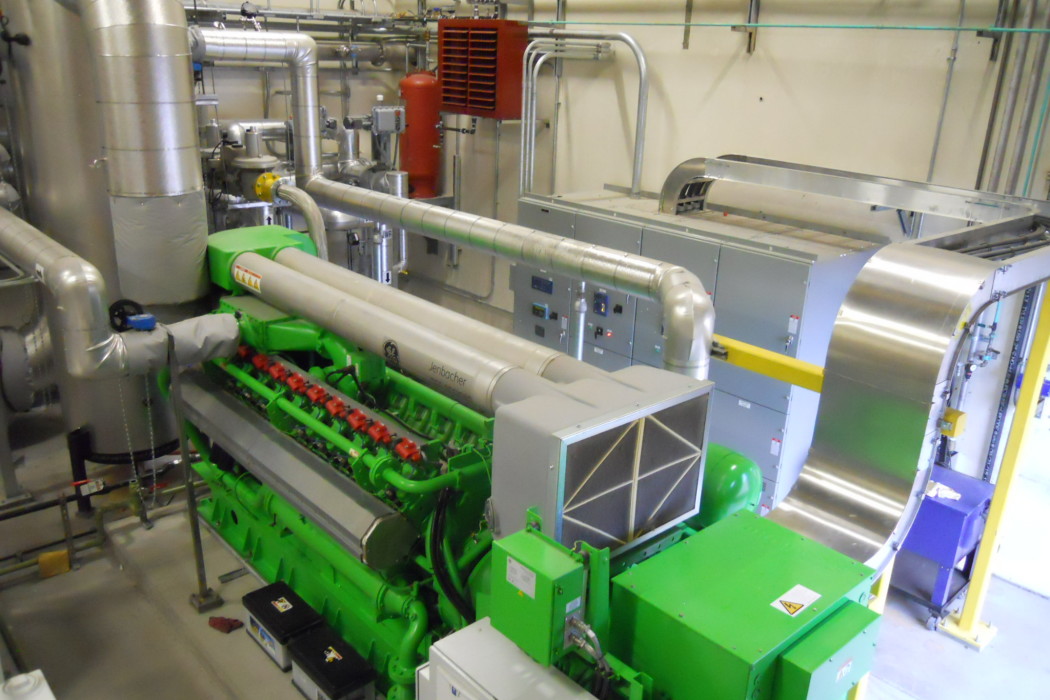
On Friday, March 11, 2016, City of Sparks and City of Reno elected officials welcomed community leaders at the Truckee Meadows Water Reclamation Facility (TMWRF) to unveil a new cogeneration system, which is being called the “green machine.” The event was a celebration marking the completion of a major milestone – replacing an outdated cogeneration system to improve energy efficiency and air quality, and reduce operating costs.
Cogeneration (or “cogen”) is a process of generating both electricity and heat from combustion of a fuel. At TMWRF, methane gas created during the wastewater treatment process is captured and used to fuel a generator. The generator creates electricity, which is sent back into the plant’s electrical grid and used to power operations, and heat, which is harnessed to heat the facility and treatment processes.
Methane gas is a natural byproduct of anaerobic digestion in which microorganisms separate and treat the biodegradable material that comes from our homes and businesses. The process is similar to how organic material degrades in nature, only at a much faster rate. The methane gas is captured from digesters and then conditioned, or “cleaned,” to remove impurities so that it will burn more cleanly.
The project was part of a larger a $24.9 million Energy Conservation project managed through a Performance Contract for energy cost savings with Ameresco, Inc. an Energy Services Company (ESCo). With funding from the Nevada Governor’s Office of Energy, Ameresco was hired to conduct an audit to analyze potential energy, water, and operating cost saving measures. Between lighting upgrades, replacement of outdated equipment and systems, and installation of the new cogeneration system, TMWRF has achieved energy savings of 45% since 2012.
This project not only created operational savings but used local equipment distributors and local subcontractors that created local jobs. The consultant team – Ameresco, Carollo Engineers, PCL Constructors, Nelson and Stantec – hired nearly 85% of the labor on this project from Northern Nevada.

An aerial view of the TMWRF facility.
TMWRF provides treatment for over 80% of all the wastewater generated from the cities of Reno and Sparks, the Sun Valley General Improvement District, and portions of unincorporated Washoe County. The plant was constructed in 1967, and since then has undergone numerous expansions to increase capacity and efficiency improvements. Once treated, wastewater is either discharged into the Truckee River or supplied as reclaimed water for agricultural and landscape irrigation – helping to conserve water.
Stay tuned for our next blog on TMWRF to learn how Ostara Nutrient Recovery Technologies is utilizing another byproduct of the wastewater treatment process to produce Crystal Green, a phosphorus-based plant fertilizer. Blog post by Lynne Barker.
Rex D Stock
Was this an open bid process? There were several local firms who approached the City of Reno and Sparks for this project prior to 2014. The City of Sparks actually said they would never do a project that involved an ESCO (Ameresco is an ESCO).How come this went to Ameresco? Was this part of the giving away of ARRA funds by the previous Energy Manager that was miraculously hired by the City of Reno (despite no job being posted)? The story here states that 85% of the work went to locals but that’s just not true. All the work was contracted by outside firms from California, so if some local workers were hired the bulk of the fees and profits went to outsiders. Heck, Ameresco didn’t even have any staff up in their Reno office. This whole thing stinks.