Last fall a call went out to the Reno community for the city’s first Poet Laureate – an official government appointed position who composes inspirational poems for special events and occasions.
Established by the Reno City Council in 2014, the City of Reno Poet Laureate will participate in public gatherings or educational settings and work with the Arts and Culture division of the Parks, Recreation & Community Services Department to share works of poetry or commentary on Reno life.
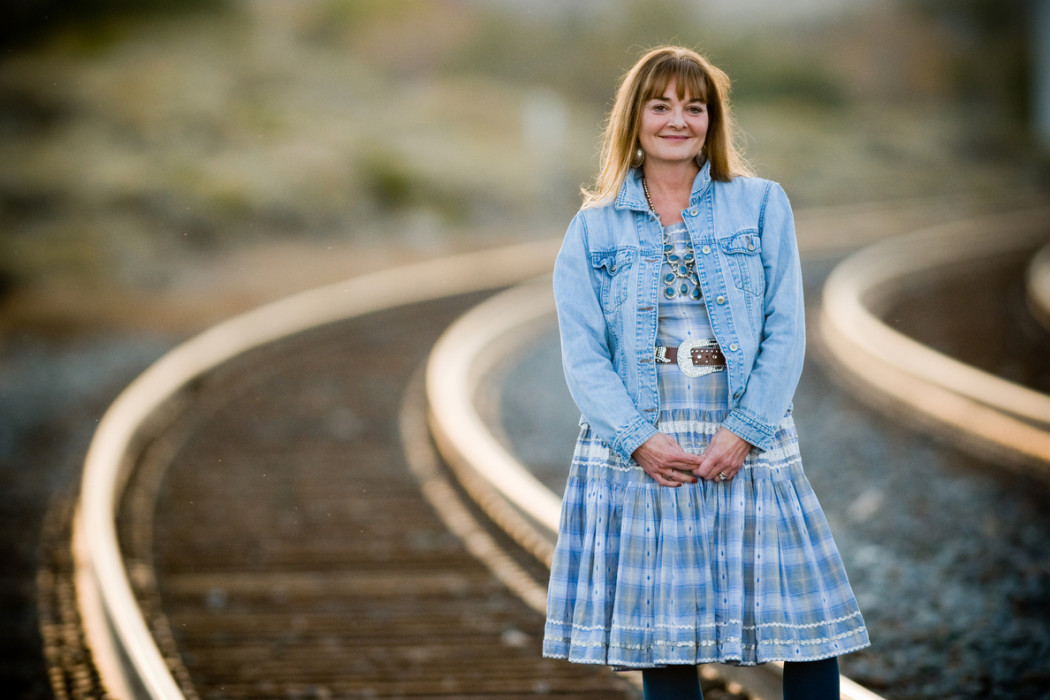
As of January 2015, Gailmarie Pahmeier has been officially announced the winner of the Poet Laureate position.
Gailmarie Pahmeier is a creative writing instructor/lecturer at the UNR English Department, specializing in poetry, poetics, women’s literature and contemporary literature. Gailmarie was kind enough to spare a few minutes to talk about her new position and the process in becoming Reno’s first Poet Laureate.
The City of Reno Poet Laureate is a relatively new concept put forth by the Reno City Council. How did you learn about the position?
Bob Blesse, former Director of Black Rock Press (one of my publishers), called me last August when this position was announced. He asked that if he nominated me and put together a nomination packet, would I be willing to serve. And I said absolutely! Nevada, and the City of Reno specifically, has been my home for most of my life, so most of my literary life has transpired here. When I agreed to be nominated, Bob then pulled together the various support materials, including letters from such wonderful supporters as Kirk Robertson, David Lee, Joe Crowley, and Shaun Griffin.
Are you nervous about representing the Truckee Meadows greater region?
I wouldn’t say I’m “nervous” about representing the Truckee Meadows as a voice for literary arts, but I’m certainly eager and hopeful for a productive term.
Can you tell us about your background in writing and literature?
This response could be nearly book-length, so I’ll just give you a skinny version: I’ve considered myself a writer for as long as I can remember, but the life I live now was not my original plan. I knew I’d always write, but I considered other careers outside of teaching, specifically a life in arts administration or the ministry. I studied at seminary as a young woman, and the first job I had in Reno was that of Arts in Education Coordinator for Sierra Arts Foundation.
As far as academic credentials, I have an undergraduate degree in Creative Writing with a fiction focus, and a MFA in Poetry.
What are some inspirations for your work?
Again, this could be a whole book! Essentially, nearly everything inspires, can inspire us if we pay attention to acute details. I’m primarily interested in the human condition, specifically those voices, usually women’s, from backgrounds not traditionally represented in literature–working class voices, for instance.
Other writers and artists also inspire me. Here’s a short list: Thomas Hardy, Robert Browning, Richard Hugo, Philip Levine, Maxine Kumin, Elizabeth Bishop, Kim Addonizio, Claudia Emerson, Dorianne Laux, Frida Kahlo, Miller Williams, Lisel Mueller…Ok, this list would be way too long to include here!
What can you say about your writing process?
Hmmmm…process. I’m always doing what I call “sketching,” which is taking notes for potential poems. This is a daily thing, but the actual drafting and composition occur when I have a large block of time. So as someone who works in the academy, this means that summers are my most productive times.
What do you do when you get stuck?
I don’t really get “stuck.” There’s just too much stimulation in our daily lives; there’s always something to observe, to render. I recommend to student writers that they get a good text, one that includes exercises, prompts for writing. The Poet’s Companion is a good one, so is In the Palm of Your Hand.
When do you call a piece finished?
I call a piece finished when I can think of nothing to add or cut. As I think that anything that doesn’t collapse a poem if removed should be cut, I’m always trimming, trimming. How can I render an image or narrative in as few words as possible? That’s what I try to do.
Do you have any specific goals for your two year term as Poet Laureate?
I am setting up Community Office Hours around the city. The idea of this is akin to campus office hours: I will park myself in a corner of some establishment (coffeehouse, bookstore, library, and hopefully some less predictable places) for about 2 hours. I will bring my own work to do but be available for anyone who’d like to talk about literary arts–poems, stories, etc. People could bring poems for me to look at or just come in for conversation. And just like what often happens on campus, if nobody comes by, no biggie!
I’d also like to work on a “Reno Poem,” one actually composed by residents of the city but edited by me. I want to start collecting short (3 line) stanzas that begin “Today in Reno…” The stanza should contain a detailed observation, a concrete detail, something the writer noticed in our community. Once I have many of these, I hope to arrange them into a coherent piece. Ideally, this would then be read aloud (looking for a radio sponsor!), and those who contributed to that particular piece would be credited as its authors.
I have several other ideas, but we do want to take some baby steps here, see what will work.
What are you trying to communicate through poetry? What would you like people to take away?
I’m trying to communicate a very basic concept, a simple one: Everyone has a voice and a right to express it; people need to be heard through both their joy and their pain. What teaching poets do is try to get those voices heard by helping them see how to articulate well. I want people to take away a sense of recognition, either of themselves (that’s my story!) or of people quite different from them (a recognition of otherness).
Is there anything else you would like to add?
Just that I’m looking very forward to the next couple of years!